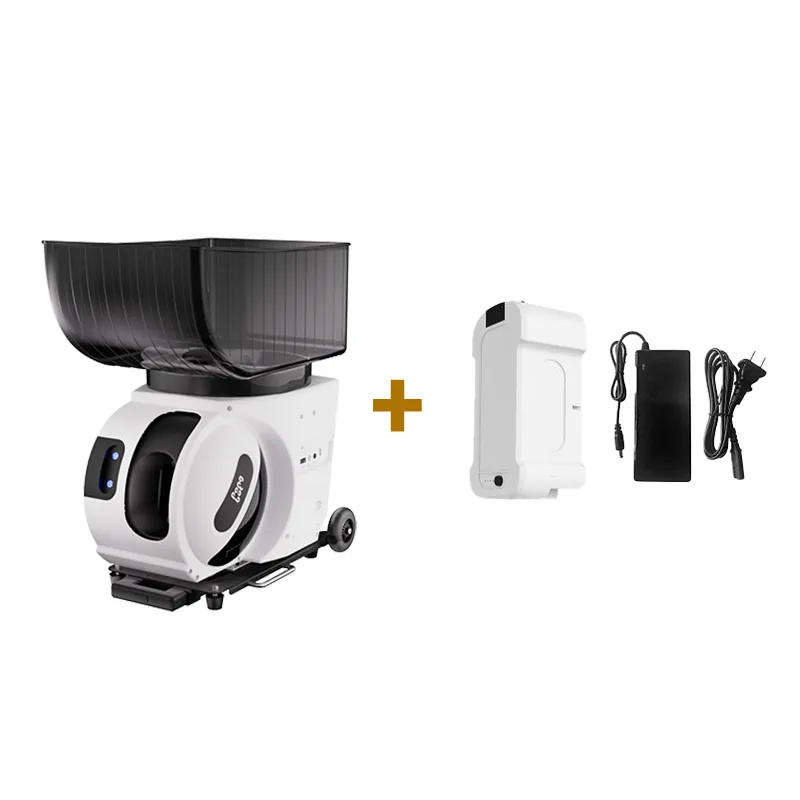
PongBot calls it the world's first true AI tennis ball machine. Strip the label off and you find something more useful: an exceptionally good ball machine with 564 drills, an eight-hour battery, and an AI layer that is genuinely clever and not yet finished.
CES Highlight 2026Best of CES 2026Twice Picks
80 mph max3,600 rpm spin150-ball hopper8 h battery564 drills
7.8/10 · reviewed 17 August 2026 · 13 min read
$1,239.99$1,999.99SAVE $760
Machine only. Four more bundles run up to $1,529.99 — we break down which one is worth it. Free shipping, ships within 48 hours, 30-day free returns.
A brilliant ball machine wearing an AI badge it hasn't fully earned
Everything the Pace S Pro does as a ball machine is excellent — fast, spinny, accurate, hard to jam, and it runs all day. The headline feature, real-time AI player tracking, is the newest and least settled part of the package. Buy it for the first thing, and treat the second as a bonus that will improve over the air.
7.8/10
Our verdict
At $1,239.99 this is a lot of ball machine for the money, and the drill library alone justifies the app. The AI tracking is genuinely novel and genuinely unfinished — independent testing found the player-location reads inconsistent during live rallies.
Best for
Players who train alone and want structured, repeatable sessions
Anyone who wants match-realistic pace without a hitting partner
Coaches feeding drills to a rotating group for hours at a time
Buyers who value 564 ready-made drills over building their own
Look elsewhere if
You are buying primarily for the AI tracking rather than the feed
You need to carry it up stairs or lift it into a high boot regularly
You want Hall-of-fame-grade serve simulation out of the base machine
Your court has no reliable place to leave a 45 lb machine between sessions
+What it gets right
Genuine match pace. Up to 80 mph is not a marketing ceiling you never touch — it is fast enough to rehearse returning a real first serve or a heavy flat drive.
Serious spin, switched fast. 3,600 rpm (60 revolutions per second) and a claimed 1.5-second switch between spin types, so a drill can alternate topspin and slice without a pause.
564 preset drills. Ranging from single-position groundstroke repetition to full-court multi-shot patterns, graded across NTRP 1.0 to 7.0. Very few competitors ship a library this deep.
Custom drills up to 46 balls, and shareable. You can build a pattern and publish it to the in-app library — a community feature that quietly makes the machine better over time.
Eight-hour battery and a 150-ball hopper. Battery life outlasts any realistic session; the hopper is the actual limit on how often you stop.
Excellent delivery consistency. Independent testing reported accurate, consistent placement with jams a rarity — the single most important quality in a ball machine.
The app beats the remote. Both are included; the smartphone app is the better interface, and OTA updates mean the machine improves after you buy it.
Aggressively priced right now. $1,239.99 against a $1,999.99 list, with free shipping, 48-hour dispatch, 30-day free returns and instalment payment available.
−Where it slips
The AI tracking needs refinement. Independent testing found player-location detection occasionally inaccurate mid-rally — which undermines the adaptive modes that depend on it.
Match mode logic can feel off. The same testing reported shot sequencing in Match Challenge sometimes seeming illogical, rather than reproducing how a real opponent would construct a point.
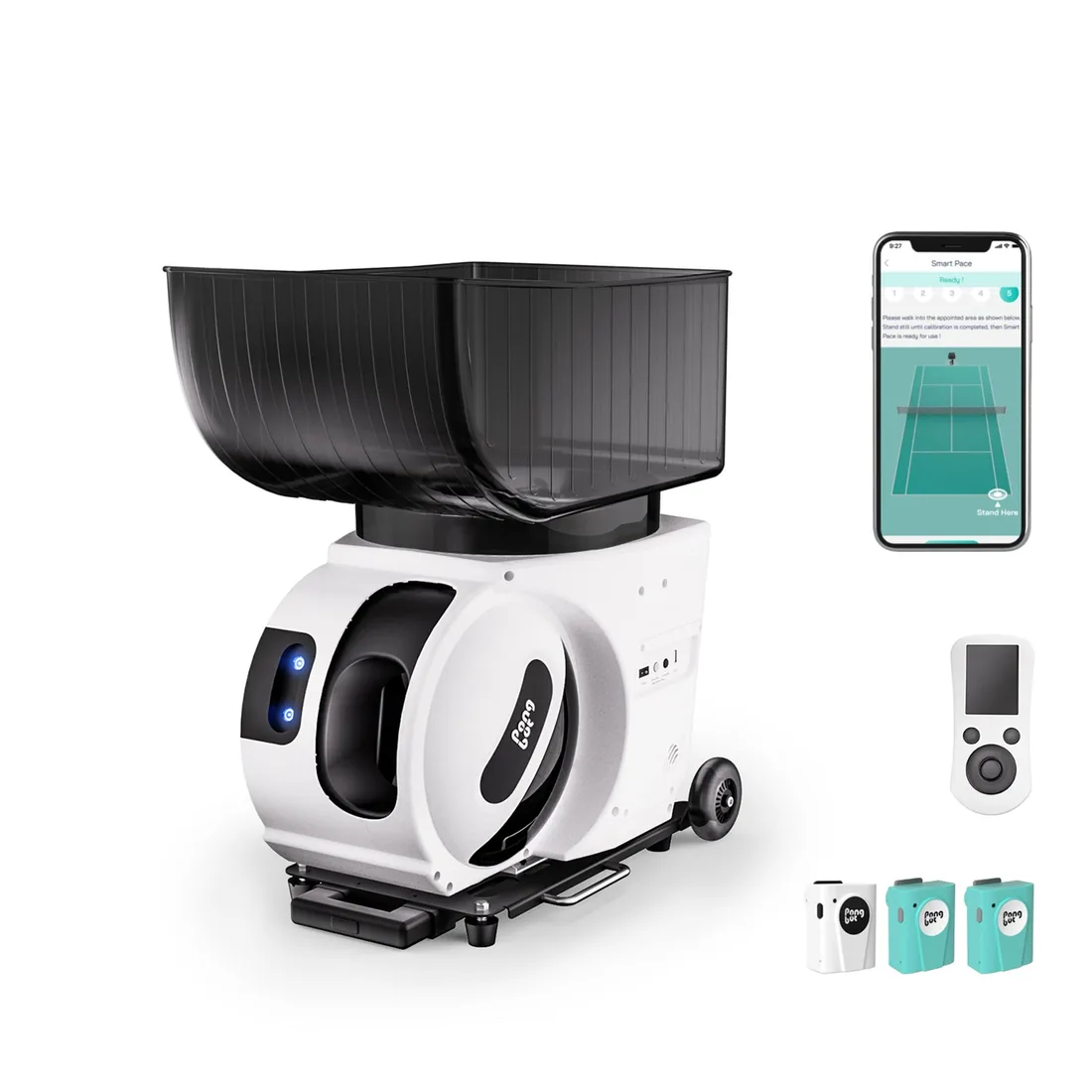
Nowhere to put the trackers. Three clip-on trackers ship with the machine and there is no storage compartment for them. Small oversight, daily annoyance, easy to lose.
45+ lb is heavy. Telescopic handle, luggage wheels and metal grab handles all help, but reviewers still describe carrying it as awkward. Stairs are not its friend.
A learning curve on the settings. The depth that makes the drill library good also makes the first few sessions fiddly.
Serve practice costs extra. The T Serve S is an add-on across four of the five bundles, not part of the base machine.
Balls are not included. A 150-ball hopper needs roughly 150 balls; that is a separate $140 bundle upgrade or your own supply.
"World's first true AI" is a stretch. The tracking is real and interesting. The superlative is doing more work than the feature currently supports.
02Scorecard
Weighted for hours on court, not spec-sheet lines
A ball machine lives or dies on whether it puts the ball where it said it would, over and over, without jamming. That is weighted heaviest here. Novelty features are scored on whether they work today, not on what an update might deliver.
Ball delivery & consistency9.0
80 mph, 3,600 rpm, lobs to 8.1 m, and — per independent testing — accurate, consistent placement with rare jams. This is the core competence and it is excellent.
Drill library & customisation9.0
564+ presets graded NTRP 1.0–7.0, custom drills to 46 balls, and a shareable community library. Depth here is unusual at any price.
Battery & ball capacity8.5
Up to 8 hours on a charge and a 150-ball hopper. The battery will never be your limit; reloading will. A spare battery bundle exists but most players will not need it.
Value at $1,239.998.5
$760 off list, free shipping, 30-day returns and instalments. Against machines offering this speed, spin and drill depth, the discounted price is strong.
App & controls8.0
App and physical remote both included, with OTA updates. The app is clearly the better of the two. Marked down for a genuine early learning curve.
AI player tracking6.5
100 Hz sampling and 10 cm claimed accuracy, but independent testing found location reads inconsistent during rallies and match sequencing sometimes illogical. Promising, not finished.
Portability6.5
Roughly 19 × 17 × 13 in and 45+ lb (about 19 kg). Telescopic handle, luggage wheels and metal grab handles are all present; it is still an awkward carry.
Design details6.0
No storage for the three clip-on trackers, no balls included with a 150-ball hopper, and serve practice gated behind an add-on. Individually minor, collectively a bit unfinished.
Five bundles, and only one obvious pick
PongBot sells the Pace S Pro in five configurations from $1,239.99 to $1,529.99. Working out the implied price of each add-on makes the decision much easier than the store page does.
The feed is the product, and the feed is very good
Before anything else, a ball machine has one job: put the ball where the drill said it would, at the pace it promised, every time, without jamming. The Pace S Pro does that well, and independent testing backs it up — placement was reported as accurate and consistent, with jams a rarity.
80 mph
Max ball speed
3,600 rpm
Max spin (60 rps)
1.5 s
Spin switch
8.1 m
Max lob height
80 mph matters more than it sounds. Plenty of machines quote a top speed you would never use, because at full pace they lose placement accuracy. Here it is a usable setting — fast enough to rehearse a first-serve return or a heavy flat drive under real time pressure.
The spin figure is the more interesting number. 60 revolutions per second is a serious amount of rotation, enough to produce a ball that genuinely kicks off the court rather than merely arriving with topspin on it. Paired with the claimed 1.5-second spin switch, a drill can alternate between a heavy topspin ball and a skidding slice within a single pattern — which is what makes practice feel like a rally rather than a metronome.
The 8.1 m lob ceiling covers overhead and smash practice, and the machine is rated across the full NTRP 1.0 to 7.0 range, so it scales from a beginner's slow feed to something a strong club player has to work at.
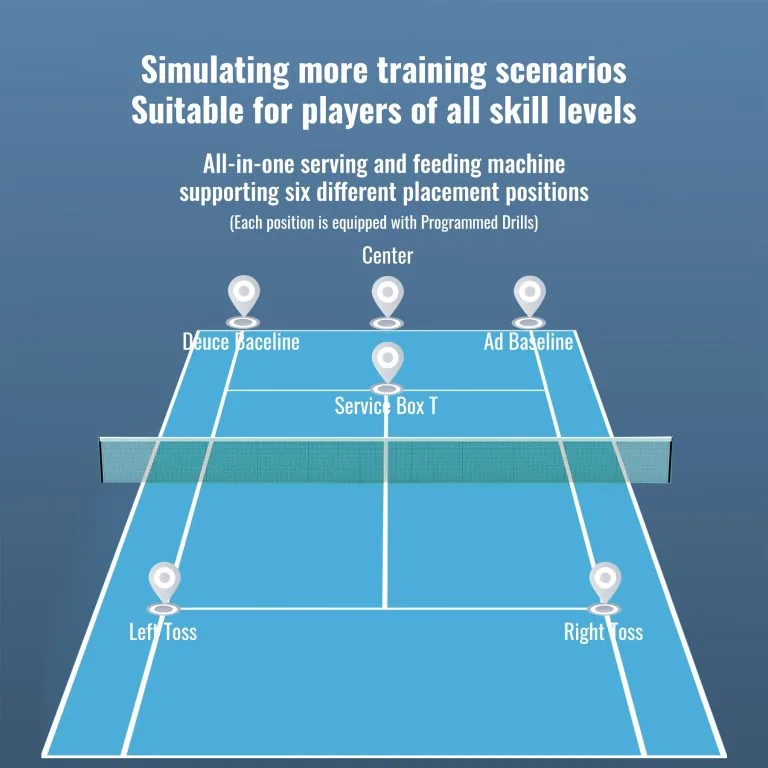
Six programmable placement positions. PongBot's own diagram is the clearest statement of what the machine actually targets — deuce and ad baselines, centre, service-box T, and left and right tosses, each with its own programmed drills. Note the wording: this is a fixed set of positions, not arbitrary court coordinates. Image: PongBot.
PongBot does not publish a per-shot interval range on the product page, which is the one figure we would add to this section if we had it. Ask before ordering if you have a specific drill tempo in mind.
564 drills is the feature people underestimate
Drill count reads like a marketing number until you have owned a ball machine. The failure mode of solo practice is not the machine — it is you, defaulting to the same comfortable crosscourt feed for the twentieth session running, because designing good practice is hard and you came to hit, not to plan.
A deep preset library is not a convenience feature. It is the thing that stops you wasting the machine.
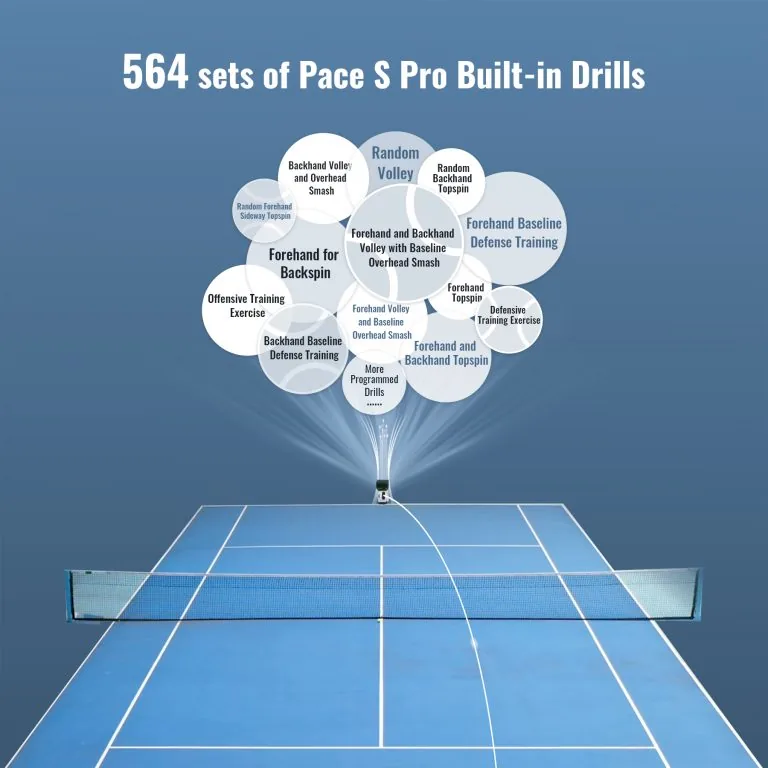
PongBot ships 564+ preset drills, spanning simple single-position repetition through to full-court multi-shot combinations, and graded to skill level so the machine can suggest something appropriate rather than dumping the whole catalogue on you.
On top of that you can build your own patterns of up to 46 balls and publish them to a shared in-app library. That community layer is genuinely valuable and rare: it means the drill catalogue grows after you buy the machine, without PongBot writing a line of code. If you coach, it also means you can author a session once and send it to every player you work with.
PongBot also cites a Match Challenge mode built on more than 10,000 real match data points, intended to make the machine construct points the way an opponent would. That is the most ambitious thing here, and — see below — the least reliable.
Where the 564 number comes from. The library is built by combining shot types — forehand and backhand baseline, volleys, overhead smash, defensive retrieval, random rally — against the six placement positions. Useful context: 564 is a product of combinations, not 564 hand-authored sessions. Image: PongBot.
The AI: real technology, genuinely unfinished
This is the feature the marketing leads with, so it deserves a straight assessment.
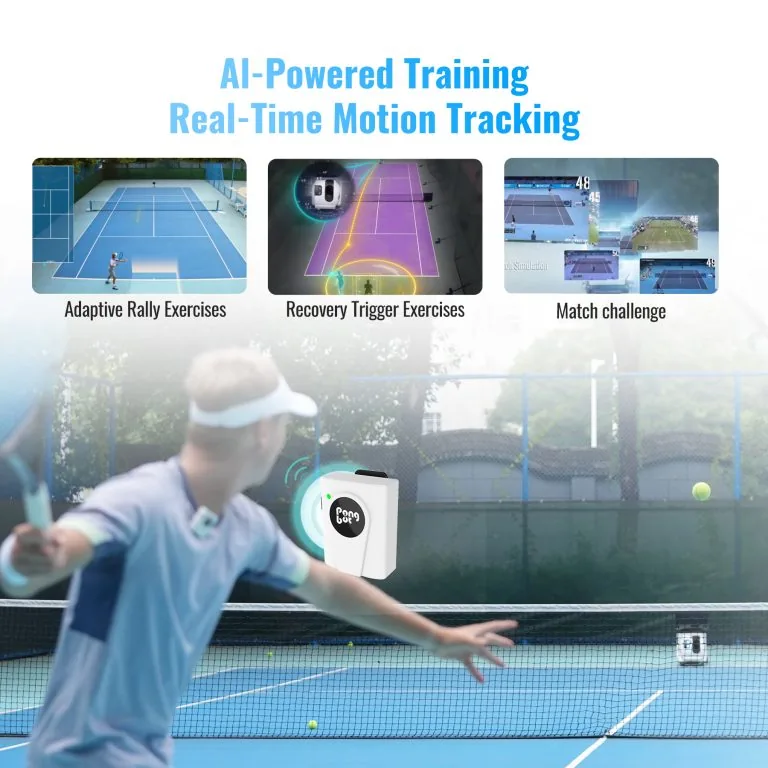
The system works through three clip-on trackers supplied with the machine. PongBot quotes a 100 Hz sampling rate and 10 cm accuracy on player position. The machine uses that live position to drive several modes: adaptive rally settings that respond to where you actually are, an intelligent recovery trigger that waits until you have recovered before firing again, and the Match Challenge mode.
The concept is excellent. A recovery-triggered feed is a fundamentally better way to train movement than a fixed interval, because it rewards you for recovering properly instead of punishing you for being slow.
The three modes the tracking drives — adaptive rally, recovery trigger, and match challenge. Every one of them depends on knowing where you are, which is why the accuracy problem below matters more than it would for a cosmetic feature. Note the tracker clipped at the player's waist. Image: PongBot.
The execution is not there yet. Independent testing by Tennis.com found the AI component innovative but imperfect: player-location detection was occasionally inaccurate during rallies, and shot sequencing in match mode sometimes seemed illogical. When the position read is wrong, every mode built on top of it — recovery trigger, adaptive rally, match construction — degrades with it.
There is also a small hardware oversight that tells you how new this feature is: there is no storage compartment for the trackers. Three small clip-on devices ship with a machine that has nowhere to put them, which is exactly the sort of detail that gets fixed in a second revision.
The mitigating factor is real: the machine takes over-the-air updates. Tracking and sequencing are software problems, and software problems on a connected product genuinely do get better. But you should buy the machine you are getting today, not the one the roadmap describes.
How to weigh this: if you removed every AI feature, the Pace S Pro would still be a very good ball machine — 80 mph, 3,600 rpm, 564 drills, 8 hours. That is the machine to price in your head. Everything the tracking adds beyond that is upside.
Battery, hopper, and the rhythm of a session
Two numbers set the shape of a practice session: up to 8 hours of battery and a 150-ball hopper.
The battery is effectively a non-issue. No solo player is hitting for eight hours, and a coach running back-to-back lessons will still get through a full day. The one scenario where it matters is a club or academy running the machine continuously across multiple courts — which is precisely who the spare-battery bundle exists for.
The hopper is the real constraint. 150 balls is generous, but at a brisk drill tempo you will empty it, and then you are picking up. That is not a criticism of this machine specifically — it is the fundamental economics of solo tennis — but it is worth being honest that the eight-hour battery describes the machine's endurance, not yours. Plan for ball collection as part of the session, and note that a recycling net is referenced in PongBot's bundle options.
One consequence worth planning for: balls are not supplied with the base machine. A 150-ball hopper wants roughly 150 balls. Either you already own a basket or you add the 100-ball bundle.
Moving 45 pounds around
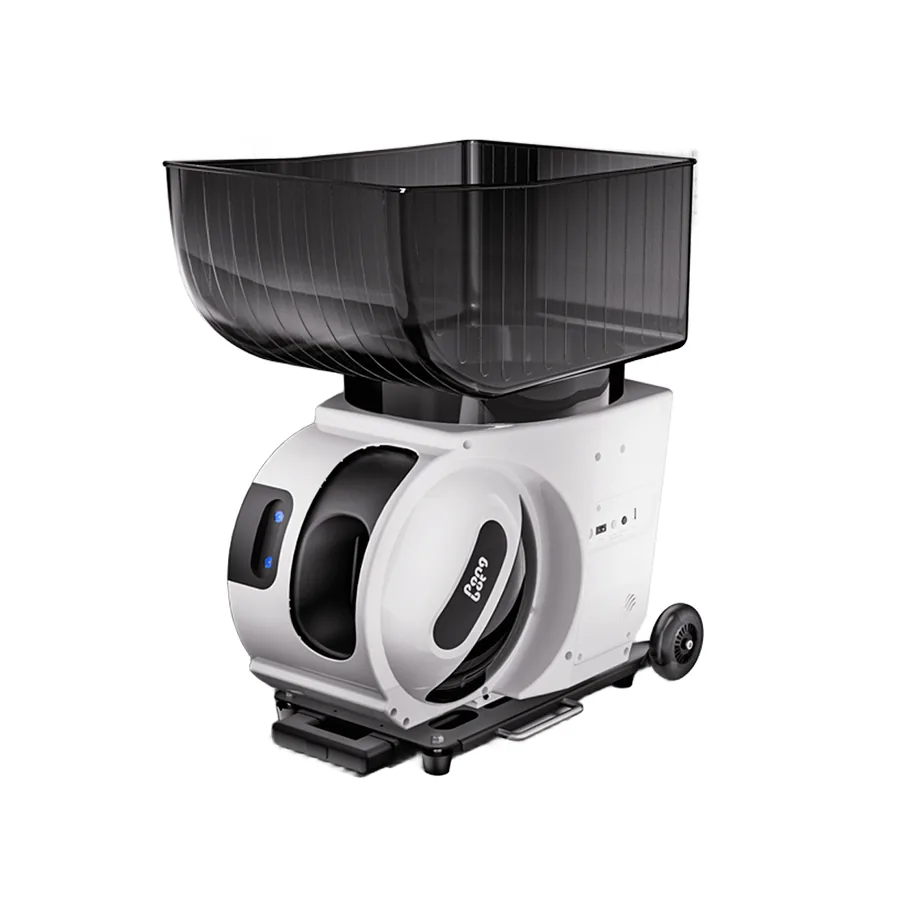
The Pace S Pro measures roughly 19 × 17 × 13 inches and weighs 45+ lb — about 19 kg net. PongBot has clearly thought about transport: there is a telescopic pull handle, luggage-style wheels, and metal grab handles for lifting.
On flat ground — car park to court gate to baseline — that combination works well and the machine tows like a suitcase. The awkwardness appears when you have to lift: into a car boot, up a flight of steps, over a kerb. Independent testing described carrying it as still somewhat awkward despite the handles, and 19 kg of dense, boxy machine is simply hard to hold close to your body.
Practically, this is a machine for players who can drive to the court and roll it in. If your court involves stairs, or you rely on public transport, weigh that honestly before buying — it will decide how often you actually use it, which matters more than any spec on this page.
App, remote, and updates
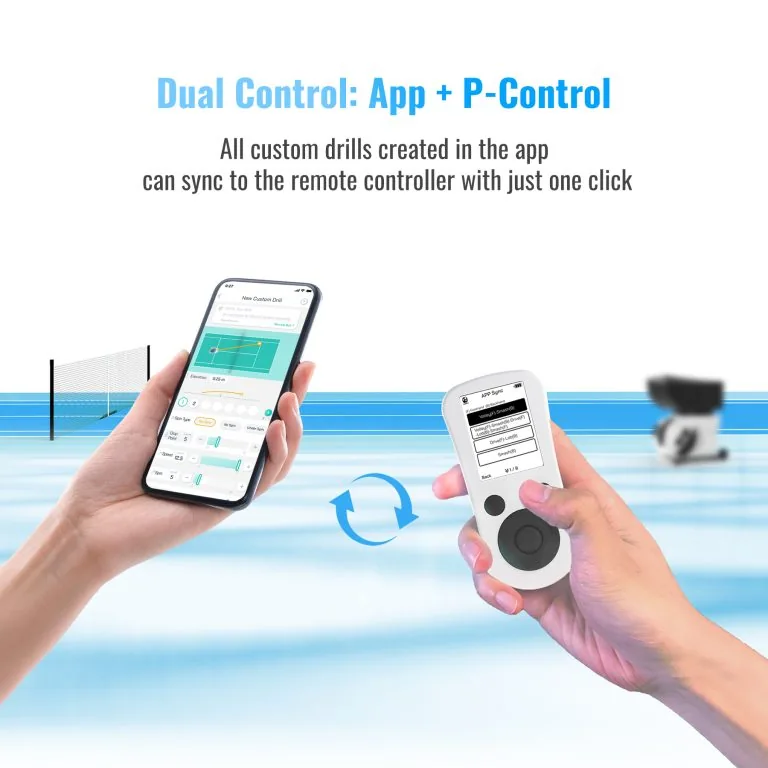
You get two control routes: a smartphone app connecting over Bluetooth, and a physical remote. Both ship with the machine.
The consensus — and it matches how these products usually work — is that the app is the better interface by some margin. It is where the drill library lives, where custom patterns are built, and where the community sharing happens. The remote's job is quick adjustments mid-drill without walking to your phone, and it is fine at that.
Both controls stay in sync. PongBot's claim is that custom drills built in the app push to the remote with one click — the arrangement that makes the remote genuinely useful rather than a stripped-down duplicate. Image: PongBot.
The genuinely valuable part is over-the-air updates. For a machine whose most ambitious feature is a work in progress, an update path is not a nice-to-have — it is the reason the AI criticism above is a "not yet" rather than a "no".
Set-up expectations honestly: there is a learning curve. There are a lot of settings, and the first couple of sessions will involve more menu-reading than hitting. That is the cost of the depth, and it fades quickly.
Who this is really for
The Pace S Pro makes most sense for the committed solo player — someone hitting two or three times a week who cannot reliably find a partner at their level, and who will actually use a structured drill library rather than just feeding themselves forehands.
It also makes strong sense for coaches. The eight-hour battery, the deep preset catalogue and the ability to author and distribute custom drills turn it into a second pair of hands during group sessions.
It makes less sense if you are buying it because of the AI. That feature is the newest and shakiest part of the product, and if the adaptive tracking is your reason to spend $1,239.99, you are paying full price for the least finished component. Wait a firmware cycle or two, or buy for the feed and let the AI mature around you.
04Spec sheet
Everything on paper
Performance figures are as published by PongBot. Dimensions and weight are as reported by independent testing, which is why they appear as approximate rather than exact.
The machine, the app, the remote and the trackers. Everything here ships together. Look closely at the trackers on the right — three small pucks, and nowhere on the machine designed to hold them. Image: PongBot.
Five configurations, and the real cost of each add-on
PongBot presents five bundles with five different "you save" figures, which makes them awkward to compare. The useful question is not what you save against list — it is what each extra item actually costs you over the base machine. That is the last column.
Bundle
List
Price
Saving vs list
Extra over base
Pace S Pro onlyThe machine, trackers, remote
$1,999.99
$1,239.99
$760
—
+ T Serve SServe add-on
$2,139.99
$1,339.99
$800
+$100
+ 100 tennis ballsFills most of the hopper
$2,149.99
$1,379.99
$770
+$140
+ spare battery + T Serve SAll-day club use
$2,499.99
$1,499.99
$1,000
+$260
+ T Serve S + 100 balls + dust coverThe full kit
$2,369.99
$1,529.99
$840
+$290
T Serve S implied cost ≈ $100
100 balls + net implied cost ≈ $140
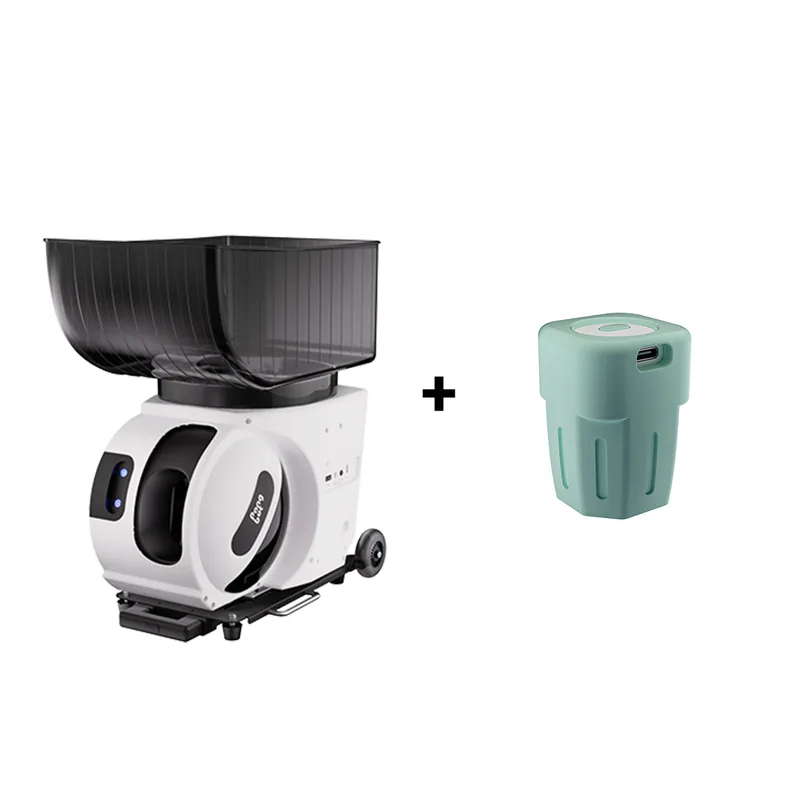
Spare battery implied cost ≈ $160
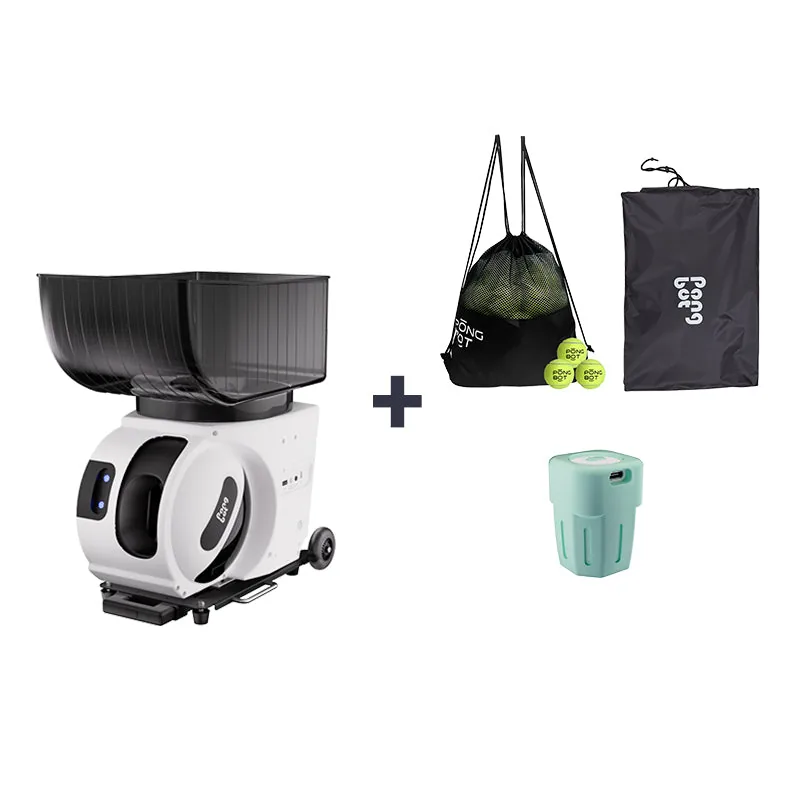
Images: PongBot. The per-item costs are our own arithmetic from the published bundle totals, not figures PongBot quotes.
What the arithmetic tells you. Subtracting the base price from each bundle gives the implied cost of every add-on: the T Serve S is about $100, 100 balls about $140, a spare battery about $160, and the dust cover about $50. Judged that way, the balls are the weakest value — $140 for 100 tennis balls is not a bargain, and you can source them yourself for less. The T Serve S at $100 and the dust cover at $50 both look reasonable. The spare battery only earns its $160 if you are genuinely running the machine beyond eight hours in a day, which almost no individual player does.
Our pick: the base machine, or base + T Serve S. Buy balls separately and skip the spare battery unless you coach full days. Note that the "$ saving" figures PongBot advertises are calculated against different list prices for each bundle, so a bigger advertised saving does not mean a better deal — the full-kit bundle advertises $840 saved but has a lower list price than the spare-battery bundle advertising $1,000. Prices and bundle contents change; verify on the product page before ordering.
06FAQ
Questions buyers actually ask
Is the Pace S Pro a table tennis machine?
No — despite the brand name, this is a tennis ball machine. It fires standard tennis balls at up to 80 mph across a full court, holds 150 balls, and is graded on the NTRP 1.0–7.0 tennis rating scale. PongBot's naming causes this confusion regularly.
How good is the AI player tracking, really?
The hardware is real: three clip-on trackers, 100 Hz sampling, 10 cm claimed accuracy, driving adaptive rally settings, a recovery trigger and a match-simulation mode.
The execution is not finished. Independent testing by Tennis.com found the tracking innovative but imperfect — player location was occasionally read inaccurately mid-rally, and match-mode shot sequencing sometimes seemed illogical. The machine takes over-the-air updates, so this should improve, but buy on the ball feed rather than the AI.
How many balls does it hold, and are they included?
The hopper holds 150 balls. Balls are not included with the base machine. PongBot sells a bundle adding 100 balls for $140 over the base price, which works out expensive for tennis balls — most buyers will do better sourcing their own.
How long does the battery last?
Up to eight hours per charge. In practice the hopper, not the battery, is what ends your session — you will reload 150 balls several times before the machine runs low. A spare-battery bundle exists (about $160 extra) and is really aimed at coaches and clubs running the machine all day. Charge time is not published.
How heavy is it and can I move it alone?
Roughly 45+ lb (about 19 kg net), measuring around 19 × 17 × 13 inches. It has a telescopic pull handle, luggage wheels and metal grab handles, so towing it across flat ground is easy. Lifting is the harder part — reviewers describe carrying it as awkward. If your route to court involves stairs, factor that in seriously.
How many drills does it have, and can I make my own?
564+ preset drills, from single-position repetition to full-court multi-shot patterns, graded across NTRP 1.0 to 7.0. You can also build custom drills of up to 46 balls and share them through the in-app library, which means the catalogue keeps growing after purchase. For coaches, this is the standout feature.
Which bundle should I buy?
The base machine at $1,239.99, or base plus the T Serve S at $1,339.99 if you want serve practice. Working backwards from the bundle prices, the T Serve S costs about $100 and the dust cover about $50 — both reasonable. The 100-ball add-on at about $140 and the spare battery at about $160 are the two we would skip unless you specifically need them.
What is the warranty and return policy?
PongBot advertises 30-day free returns, free shipping with dispatch within 48 hours, and lifetime customer support. A specific hardware warranty term is not stated prominently on the product page, so confirm the warranty length and what it covers before ordering — particularly for the battery, which is the component most likely to need service.
07Where to buy
Official store & stockists
PongBot sells direct through store.pongbotsports.com, where all five bundles live. Specialist tennis retailers also carry the line, which is worth checking for regional stock and local warranty handling.
External links only — these are not affiliate links, and Baseline Bond earns nothing if you buy. PongBot's pricing is heavily promotional and the bundle line-up changes; every figure quoted in this review was recorded in August 2026.
08Final verdict
7.8/10
Buy it for the feed. The AI is upside, not the reason.
Judged as a ball machine, the Pace S Pro is close to the top of its class. 80 mph with placement that holds up at speed, 3,600 rpm of spin switchable in a second and a half, a 150-ball hopper, eight hours of battery, and a drill library deep enough that you will never run out of ways to structure a session. Independent testing confirms the delivery is accurate and consistent — which is the only thing a ball machine truly has to get right.
The AI layer is where expectation and reality separate. Three trackers at 100 Hz driving adaptive, recovery-triggered training is a genuinely good idea, and when it works it trains movement better than a fixed interval ever could. But the position reads are not yet reliable mid-rally, the match logic can be strange, and there is nowhere to store the trackers. OTA updates make this a "not yet" rather than a "no" — just do not pay $1,239.99 for a promise. Pay it for the machine, and let the software catch up.
Train alone two or three times a week and want structure
Will actually work through a graded drill library
Coach, and want a second feeder that runs all day
Can drive to the court and roll the machine in
Want match-realistic pace and spin without a partner
Skip if you
Are buying specifically for the AI tracking today
Have to carry 19 kg up stairs to reach your court
Only ever want a simple fixed-interval feed
Need a published warranty term before committing
Would rather wait a firmware cycle for the tracking to settle
09Sources & method
How this review was put together. This is a research-based review compiled from PongBot's published specifications and bundle pricing, cross-checked against independent hands-on testing — principally Tennis.com, whose reviewer used the machine on court, and a second review from Cerebral Overload. We have not tested a Pace S Pro ourselves. Speed, spin, lob height, tracking accuracy and drill counts are manufacturer figures; dimensions, weight and all criticisms of the AI tracking come from the independent testing cited. Bundle add-on costs in section 05 are our own arithmetic from PongBot's published bundle prices. Where a specification is absent from PongBot's page we have marked it "not published" rather than estimating it. Prices were recorded in August 2026 and this product is heavily promoted — verify before buying.
On the photography. All product images on this page are PongBot's own, reproduced from the Pace S Pro listing for the purpose of review and credited in each caption. We have not altered them beyond resizing and compression. Several are marketing diagrams rather than photographs, and we deliberately selected versions without promotional price overlays — the claims those diagrams make are PongBot's, not ours.